




The GI & Beyond 2.0 Summit connected Indian artisans, buyers and policymakers to expand global opportunities for GI-tagged handloom and handicraft products.
A Strategic Platform for GI Products
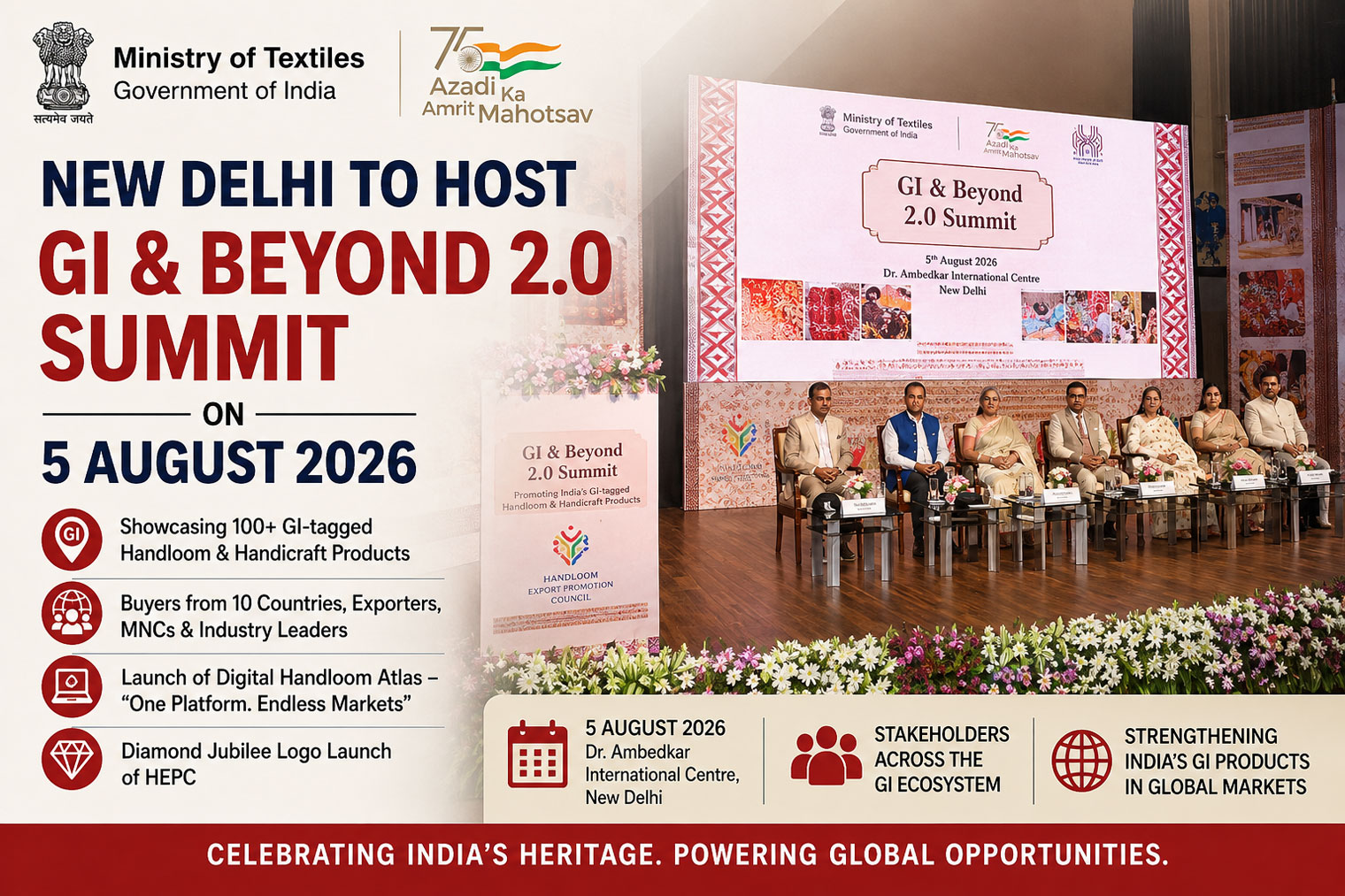
The Ministry of Textiles successfully hosted the GI & Beyond 2.0 Summit on 5 August 2026 at the Dr. Ambedkar International Centre in New Delhi. The Office of the Development Commissioner (Handlooms), in association with the Handloom Export Promotion Council (HEPC), organised the summit to promote India’s Geographical Indication (GI)-tagged handloom and handicraft products.
The event brought together policymakers, overseas buyers, exporters, industry leaders, GI stakeholders, weaver organisations, academics and government representatives. By creating a common platform, the summit encouraged collaboration across the GI ecosystem and explored new opportunities for Indian traditional products in domestic and international markets.
Shri Pabitra Margherita, Minister of State for External Affairs and Textiles, inaugurated the summit. Smt. Neelam Shami Rao, Secretary (Textiles), attended the event along with senior officials, including Dr. M. Beena, Development Commissioner (Handlooms), Smt. Amrit Raj, Development Commissioner (Handicrafts), and Prof. (Dr.) Unnat P. Pandit, Controller General of Patents, Designs and Trade Marks.
GI Recognition and Cultural Identity
During his inaugural address, Shri Pabitra Margherita described Geographical Indications as more than legal protections. He presented GI tags as symbols of India’s cultural heritage, craftsmanship and regional identity. He also stressed the importance of combining technology and innovation with traditional skills to expand market access without weakening the authenticity of Indian products.
The Minister highlighted the role of GI products in strengthening India’s soft power and supporting sustainable livelihoods for artisans and weavers. Each GI product carries the identity of a particular region and reflects generations of knowledge, techniques and cultural practices.
Smt. Neelam Shami Rao emphasised the government’s efforts to strengthen the handloom ecosystem through policy support, digital initiatives, market development and institutional cooperation. She noted that digital platforms could give India’s GI-tagged products greater visibility and create stronger links between weavers, buyers and consumers.
Digital Handloom Atlas Launched
The launch of the Digital Handloom Atlas, titled “One Platform. Endless Markets,” emerged as one of the summit’s most important achievements. The platform aims to present India’s handloom products, including GI-registered products, in a single digital space and connect artisans with wider markets.
The atlas can help improve product discovery, promote regional weaving traditions and create new opportunities for domestic and international buyers. It also reflects the Ministry’s effort to use digital tools to support artisans and make India’s diverse handloom heritage more accessible to global audiences.
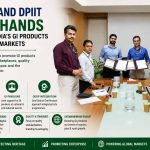
The event also included the presentation of GI certificates to registered proprietors and newly authorised users. These certificates strengthened formal recognition for products linked to specific regions and communities.
New GI Certificates and HEPC Logo
The summit recognised several traditional products through the presentation of new GI certificates. These included Ladakh Nambu Textile, Ladakh Pashmina Textile, Himachal Gudma, Himachal Lingchay, Jharkhand Bamboo Craft, Jharkhand Tussar Silk Saree and Fabrics, Munda Jewellery of Jharkhand, and Bareilly Terracotta.
The HEPC also unveiled its Diamond Jubilee Logo, marking sixty years of the council’s contribution to promoting India’s handloom exports. The logo represented the organisation’s long association with Indian weavers, exporters and international markets.
More Than 100 Products on Display
The summit displayed more than 100 GI-registered handloom and handicraft products from different parts of India. The exhibition presented the country’s regional diversity through textiles, crafts, weaving traditions and handmade products.
Thematic displays helped visitors understand the history and distinctiveness of India’s weaving communities. Live demonstrations by artisans and weavers added an interactive dimension to the event. Visitors could observe traditional techniques and appreciate the skill required to create handmade products.
These displays also enabled overseas buyers, exporters and retailers to engage directly with products and producers. Such interactions can help transform cultural appreciation into business partnerships and long-term market opportunities.
Technology, Intellectual Property and Markets
Technology formed a central part of the summit’s discussions. Experts from IIT Madras delivered a special presentation on the possible application of artificial intelligence in strengthening the GI ecosystem.
Three technical sessions focused on GI registration and intellectual-property rights, domestic promotion of GI products, and strategies for expanding GI handloom products in international markets. Government representatives, industry experts, academics, intellectual-property professionals, retail brands and international organisations contributed to these discussions.
The sessions addressed the need to protect GI products from misuse while improving branding, distribution and consumer awareness. They also explored how innovation can support traditional producers without replacing the cultural knowledge that gives each product its identity.
Strengthening India’s Global Handloom Presence
The GI & Beyond 2.0 Summit concluded by reaffirming the Ministry of Textiles’ commitment to protecting and promoting India’s GI-tagged handloom and handicraft products. The event connected artisans and weaver organisations with policymakers, exporters, overseas buyers and industry leaders.
Its key initiatives-the Digital Handloom Atlas, GI certificate presentations, product exhibition, AI-focused discussion and market-oriented technical sessions-created a stronger foundation for future cooperation. The summit therefore positioned GI products not only as cultural treasures but also as instruments for artisan livelihoods, sustainable development and India’s global market presence.
#GIBeyond2Summit #GeographicalIndication #GIHandloom #IndianHandicrafts #DigitalHandloomAtlas #HandloomExport #MinistryOfTextiles #IndianWeavers #TraditionalCrafts #MakeInIndia
Disclaimer
The information in this article is based on available public sources and official statements as of the time of publication. While we aim for accuracy, we do not guarantee completeness or correctness. We advise readers to verify key details from official sources before making any decisions. The website (fashionsamvaad.com) is not liable for any loss or damage arising from the use of this content. The authors are also not responsible for any such loss or damage.