








Rare Planet transformed Indian handicrafts into a modern retail success, helping thousands of artisans reach wider markets through design, trust, and strong business growth.
From Clay Cups to a National Brand
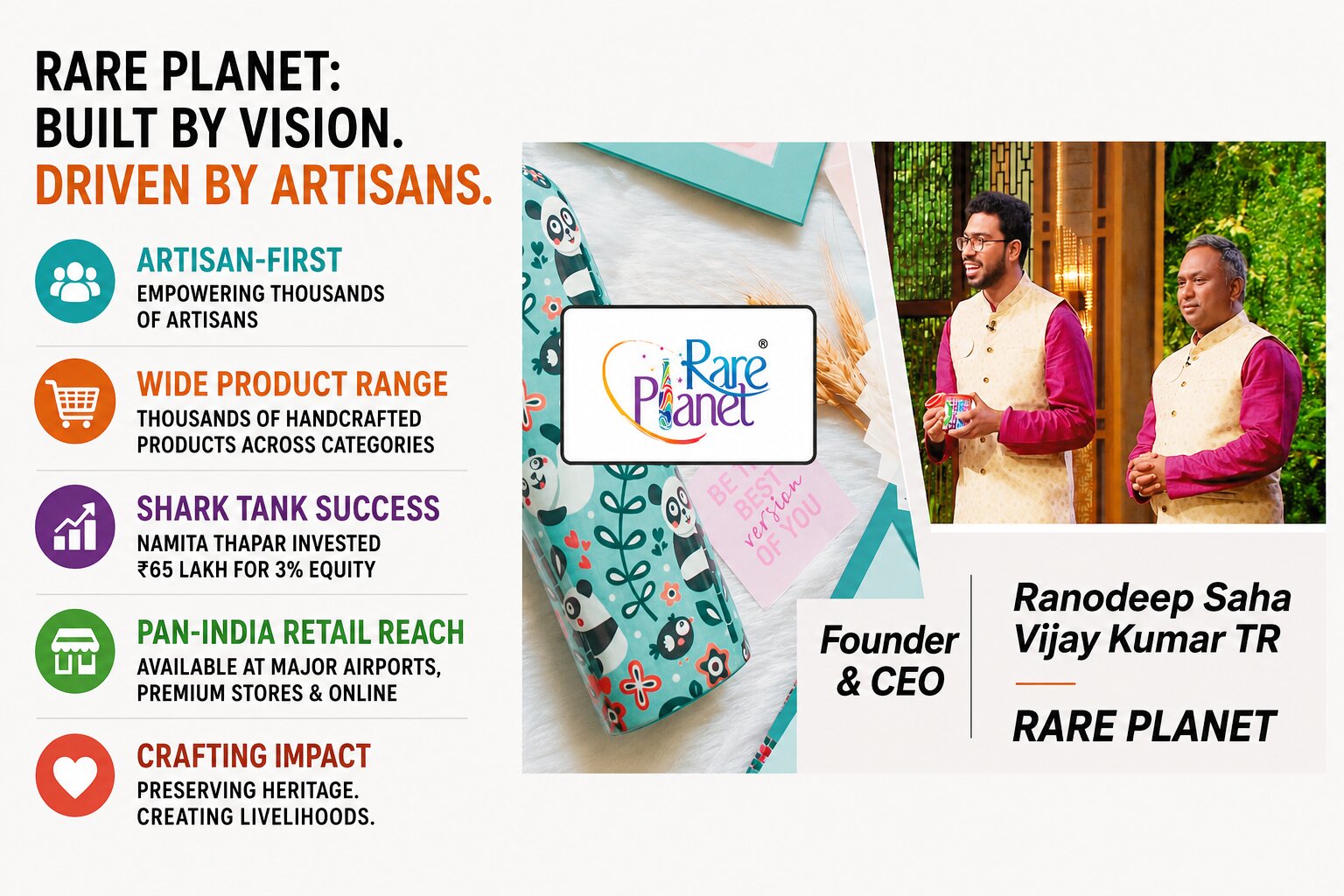
Rare Planet began as a simple idea and grew into one of India’s most recognizable craft-focused startups. Founded in 2017 by Ranodeep Saha, the company set out to connect traditional Indian handicrafts with modern consumers while creating better livelihood opportunities for artisans. What started with hand-painted clay cups has now expanded into a wide product ecosystem that reaches customers across India and beyond.
Saha’s journey started while he was still studying engineering. He painted kulhads and sold them at fairs to earn extra income, but those early experiences exposed him to a larger problem. He saw that highly skilled artisans across rural India were producing excellent work without access to proper markets, branding, or fair recognition. That insight became the foundation of Rare Planet.
Building the Business
The company gained momentum when Vijay Kumar TR joined the venture. His background in airport retail and business development complemented Saha’s product and artisan-network expertise. Together, they built a more structured brand model that could scale beyond a small craft business.
Saha concentrated on product development, design, and artisan relationships, while Kumar handled partnerships, retail expansion, and brand positioning. This division of work helped Rare Planet grow from a niche concept into an organized retail business with a clear identity. The company’s success shows how a mix of creativity and commercial strategy can support traditional industries.
Artisan-First Model
Rare Planet’s biggest strength is its artisan-first approach. The company works directly with thousands of artisans and helps them with design refinement, quality improvement, packaging, and marketing. That support raises the value of the products while giving artisans a more stable path to income.
Instead of treating craftspeople as anonymous suppliers, the brand places them at the center of its business model. This approach creates a stronger connection between the maker and the buyer, which is increasingly important in premium retail and e-commerce. It also allows the brand to present Indian craft as both culturally rooted and commercially relevant.
Product Range Expansion
The company no longer depends on a narrow product line. Rare Planet now offers thousands of designs across terracotta, ceramics, wood, metal, copper, home décor, pooja items, gift products, jewellery, stationery, and lifestyle goods.
This expansion helped the brand move from artisan fairs into mainstream retail. By broadening its catalog, the company made traditional craft more accessible to modern consumers who want products that feel both functional and meaningful. The strategy also reduced dependence on one category and created more business opportunities for its artisan network.
Shark Tank Breakthrough
Rare Planet received major national attention after appearing on Shark Tank India Season 1. Saha and Kumar presented their artisan-led model and asked for Rs. 65 lakh in exchange for 1 percent equity. After negotiations, Namita Thapar invested Rs. 65 lakh for a 3 percent stake.
That moment did more than provide capital. It gave Rare Planet visibility, credibility, and a wider audience. After the episode aired, the company saw stronger sales, more customers, and faster retail expansion. The show became a turning point that helped transform a promising startup into a nationally known brand.
Retail Reach and Growth
Today, Rare Planet sells through major airports, premium retail outlets, and online platforms across India. Its presence in airports and high-traffic premium locations reflects the brand’s positioning as a modern craft label with broad consumer appeal.
The company’s growth also has a social impact. By expanding demand for artisan-made products, Rare Planet has created employment and better income opportunities for thousands of rural families. Its business model proves that handmade products can scale successfully when design, branding, and distribution are handled well.
Why the Story Matters
Rare Planet’s journey matters because it shows how a startup can combine profit with purpose. The brand did not abandon tradition to become modern; instead, it translated tradition into a form that fits today’s marketplace.
Ranodeep Saha and Vijay Kumar TR built more than a company. They created a bridge between India’s craft heritage and contemporary retail, showing that traditional skills can thrive when supported by vision, structure, and market access. Their story stands as a strong example of how entrepreneurship can preserve culture while building a scalable business.
#RarePlanet #RanodeepSaha #VijayKumarTR #IndianHandicrafts #ArtisanFirst #StartupSucces #CraftBrand #SharkTankIndia #RuralLivelihoods #MadeInIndia
Disclaimer
The information in this article is based on available public sources and official statements as of the time of publication. While we aim for accuracy, we do not guarantee completeness or correctness. We advise readers to verify key details from official sources before making any decisions. The website (fashionsamvaad.com) is not liable for any loss or damage arising from the use of this content. The authors are also not responsible for any such loss or damage.