










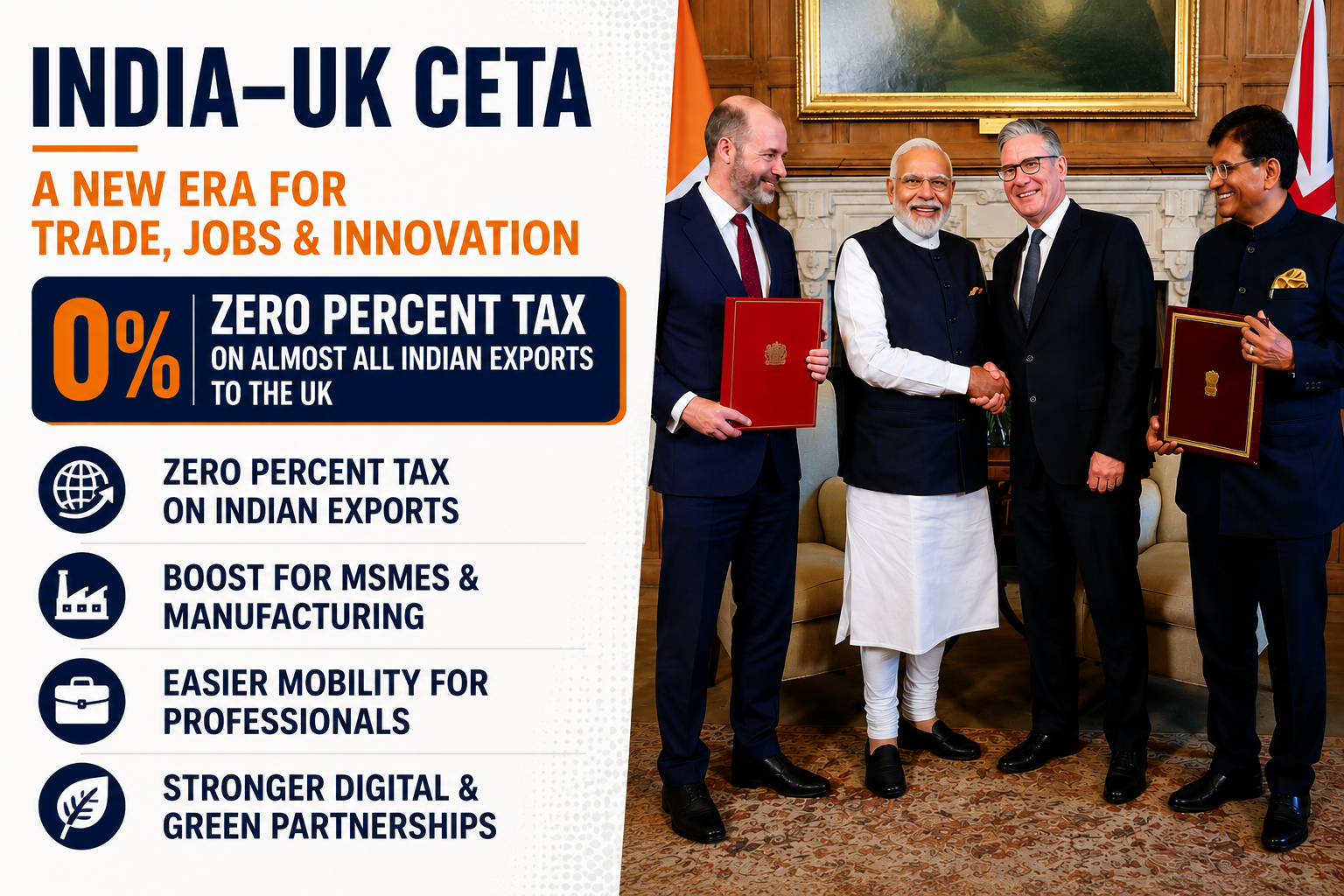
India and the UK have concluded the India-UK CETA, opening markets, boosting jobs, and deepening cooperation in trade, services, mobility, and emerging technologies for inclusive growth.
A Landmark Trade Pact After Successful Conclusion
The India-UK Comprehensive Economic and Trade Agreement (CETA) has now been concluded, marking a major milestone in the economic partnership between New Delhi and London. The agreement aims to sharply increase bilateral trade, support high-quality jobs, and position both economies for long‑term, innovation‑led growth.
By substantially reducing tariffs and easing regulatory barriers, the pact turns the UK into a more attractive destination for Indian goods and services while giving Indian consumers and businesses more choice and better access to global value chains. The agreement also reflects India’s broader strategy of integrating with key partners while safeguarding sensitive sectors at home.
Big Gains For Indian Exports And MSMEs
Under CETA, almost all Indian exports to the UK now receive duty‑free access, especially labour‑intensive sectors such as textiles, leather, marine products, gems and jewellery, toys, engineering goods and certain chemicals. This preferential access levels the playing field against competitors that previously enjoyed tariff advantages in the UK market.
Micro, small and medium enterprises (MSMEs) stand out as major winners. They benefit from lower tariffs, simpler customs procedures and more predictable rules, which together reduce export costs and improve margins. Many traditional clusters-from textile hubs to handicraft centres-can now tap new demand in the UK, helping artisans, women workers and rural producers move up the value chain.
Services, Professionals And Mobility At The Core
The agreement goes far beyond goods. It offers extensive market access in a large number of service sub‑sectors that matter deeply to India, including IT and IT‑enabled services, finance, business services, healthcare, education and professional services. Indian companies can now operate with greater certainty, while professionals gain clearer pathways for temporary movement and work in the UK.
CETA also streamlines mobility for business visitors, intra‑corporate transferees, contractual service suppliers and independent professionals through defined categories, time frames and transparent conditions. Provisions on social security contributions further reduce the financial burden on short‑term Indian workers, making cross‑border assignments more attractive for both employees and employers.
Protecting Sensitive Sectors While Opening Up
India has pursued an asymmetric and calibrated approach while negotiating its own tariff concessions. Sensitive sectors such as dairy, cereals, some fruits and vegetables, gold and certain manufactured products remain either excluded or subject to long transition periods. This structure allows India to capture export gains while giving vulnerable domestic sectors time and policy space to adjust.
At the same time, India provides substantial access where domestic industry is competitive or seeks global inputs-for instance in many industrial products, intermediate goods and modern services. The result is a balanced package that attempts to align trade liberalisation with food security, farmer livelihoods and industrial policy priorities.
Digital, Green And Innovation‑Led Partnership
Beyond immediate trade flows, the agreement anchors long‑term cooperation in digital trade, emerging technologies and green growth. It encourages paperless trading systems, faster digital documentation and better use of standards to cut time and costs at the border. This shift directly benefits exporters who rely on just‑in‑time deliveries and integrated supply chains.
The pact also highlights collaboration in areas such as clean energy, climate‑friendly technologies and innovation ecosystems, signalling that the partnership will extend into future‑ready sectors. Together with mutual recognition of qualifications and steps to ease talent flows, CETA lays the foundation for deeper knowledge‑driven cooperation between institutions, start‑ups and research centres in both countries.
People‑Centric, Inclusive Growth Narrative
Throughout the negotiations and conclusion, both sides have presented CETA as a people‑centric agreement that focuses on jobs, skills and inclusive development. The provisions support farmers, artisans, women, youth and MSMEs by creating new export opportunities, encouraging entrepreneurship and backing skill development.
By combining market opening with safeguards, digital reforms and green ambitions, the agreement aims to turn the India-UK relationship into a model of modern, equitable economic cooperation. For stakeholders across sectors-from exporters and professionals to students and innovators-the end of negotiations marks the beginning of a new phase of possibilities.
#IndiaUKCETA#IndiaUKTrade#FreeTradeAgreement#IndianExport#MSMEGrowth#ServicesTrade#ProfessionalMobility
#DigitalTrade#GreenGrowth#InclusiveDevelopment