








VIRGIO used AI-driven demand signals and on‑demand manufacturing to cut waste, scale responsively, and reshape supply chains-positioning itself for rapid sustainable growth.
VIRGIO, the Bengaluru-based fashion‑tech challenger, showcased how it’s turning traditional apparel production on its head by marrying artificial intelligence with a Made‑On‑Demand (MOD) model. At the recently concluded event, company leaders shared concrete results and operational lessons from piloting demand‑led manufacturing, demonstrating how real‑time consumer signals can replace months‑long forecasting cycles and reduce the industry’s persistent overproduction problem.
AI and human creativity in tandem
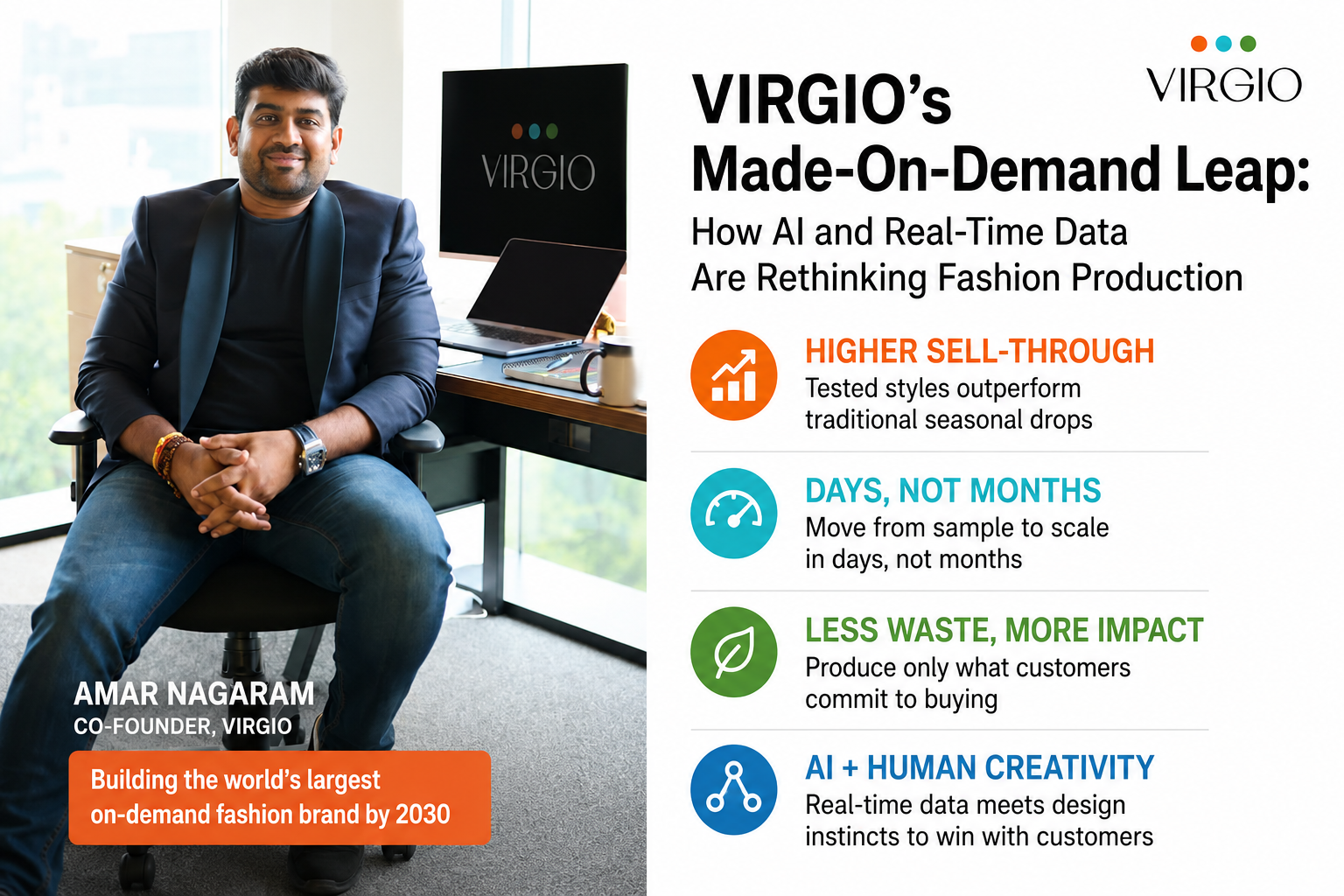
VIRGIO’s co‑founder Amar Nagaram explained how the firm combines machine learning with design instincts. The company runs small, rapid tests of new styles online, then uses AI to track click‑throughs, engagement, conversion and return rates. Human merchandisers and designers then interpret those signals to refine fits and finishes before scaling production. The result is a feedback loop that shortens the time between trend detection and product availability, letting customer preference-not speculation-dictate inventory.
Key event highlights
- Real‑world validation: VIRGIO presented performance metrics showing higher sell‑through on tested styles and significantly lower markdown rates compared with traditional seasonal drops.
- Speed to scale: The company described production workflows that move validated designs from sample to full run in days rather than months, enabled by flexible manufacturing partners.
- Inventory reduction: Executives reported meaningful reductions in unsold stock and associated carrying costs, quantifying both environmental and balance‑sheet benefits.
- Sustainability impact: By producing only what customers commit to buying, VIRGIO argued it can materially cut waste-a claim supported by early lifecycle and waste‑reduction estimates shared at the event.
- Tech stack transparency: The firm outlined its proprietary ecosystem: trend monitoring, demand forecasting, production orchestration and a data pipeline that feeds into creative and merchandising decisions.
Operational model and supply‑chain implications
VIRGIO’s MOD approach depends on an integrated supplier network able to accept small, frequent orders and pivot quickly. During the event, operations leaders described investments in modular production cells, near‑shoring options, and digital order routing that balance speed with cost. They emphasized that scaling MOD requires rethinking vendor contracts, quality assurance processes, and logistics planning to support many small batches rather than few large shipments.
Customer experience and merchandising tactics
Instead of waiting for seasonal launches, customers now see a constantly refreshed assortment. VIRGIO uses limited small‑batch drops as a discovery mechanism—successful items graduate into larger runs. Marketing focuses on scarcity and responsiveness, positioning the brand as both trend‑forward and eco‑responsible. The company also highlighted personalization levers driven by AI, showing how recommendations and micro‑campaigns lift conversion for newly validated styles.
Challenges ahead and risk management
Executives acknowledged clear hurdles: maintaining margin while producing in smaller quantities, ensuring consistent quality across many micro‑batches, and avoiding consumer frustration from limited availability. They outlined mitigation plans, including dynamic pricing, minimum viable batch sizing, and improved transparency in delivery lead times. The team also noted the need for continual investment in AI governance to prevent bias in trend selection and to protect customer data.
Investor perspective and growth targets
VIRGIO reiterated its 2030 ambition to become the world’s largest on‑demand fashion brand. At the event, leadership framed that goal as achievable through a two‑pronged approach: deepen tech capabilities to accelerate validation cycles, and expand a geographically diversified manufacturing network to keep costs competitive while preserving speed. They shared KPIs investors should watch—time from test to scale, percentage of catalog sourced on demand, and inventory days reduction—as measures of progress.
Takeaways for the wider industry
VIRGIO’s presentation underlined a simple idea with broad implications: the business case for producing to validated demand is now credible. For legacy brands, the model offers a pathway to lower waste and reduce markdown pressure, but it requires cultural change, supplier partnerships, and the right data infrastructure. For fast‑fashion disruptors, MOD promises differentiation through agility and sustainability claims with measurable operational benefits.
#VIRGIO #MadeOnDemand #FashionTech #AIinFashion #SustainableFashion #OnDemandManufacturing #FashionSupplyChain #FastFashionAlternative #DemandLedDesign #CircularFashion